It's the classic freeze-belt morning: one faucet is dead, the pipe that feeds it runs through the garage, and somebody at the hardware store just handed you a box of heat tape for frozen pipes. Will it actually work? Yes. Applied correctly, it both thaws the frozen line and prevents the next freeze. It's also one of the few winterization products that can burn a house down when used carelessly, so this guide is half instructions, half guardrails.
Heat tape, heat cable: what you're actually buying
Two different technologies share the shelf:
- Self-regulating heat cable uses a conductive polymer core that puts out more heat as the pipe gets colder and throttles back as it warms. It can safely touch itself at crossings, tolerates being left energized all season, and is the safer default for plastic lines. It costs more.
- Constant-wattage tape puts out fixed heat per foot whenever powered, usually switched by a built-in thermostat. Cheaper, but it must never overlap itself, and it demands closer attention to the instructions.
Whichever you buy, it should carry a certification mark from a recognized testing lab. The American Red Cross specifically recommends UL-listed heat tape or heat cable for exposed water pipes; an uncertified bargain cable is the wrong place to save money.
Can heat tape thaw frozen pipes that are already solid?
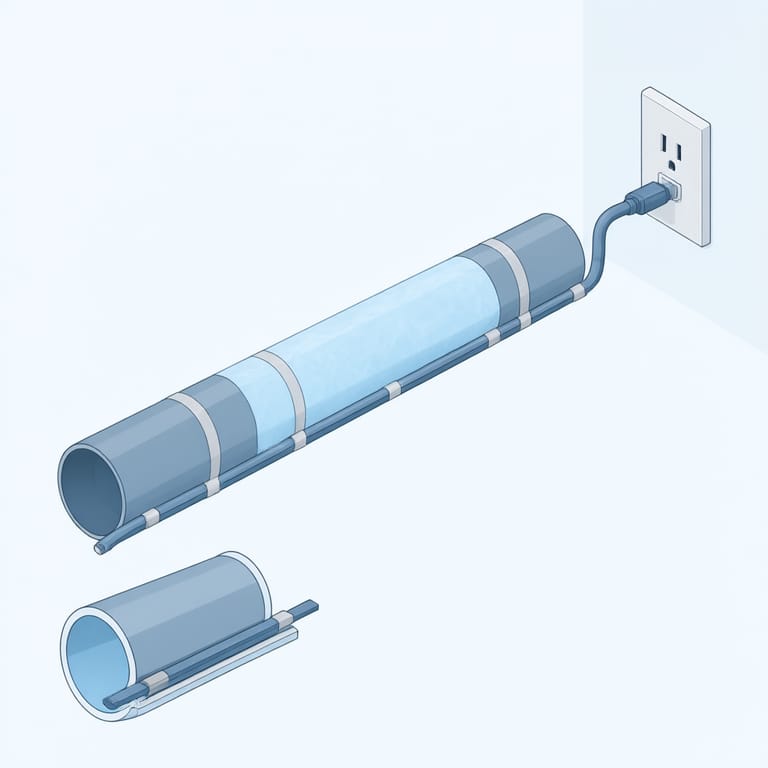
Yes. Heat tape for frozen water pipes works from the outside in: laid along the frozen section, the element warms the pipe wall and melts the ice. Will heat tape thaw frozen pipes buried behind a finished wall? No; the cable has to lie on the line itself, which is why access decides this method. Two expectations to set:
It takes hours. A short freeze in a thin copper line may clear quickly; a long ice plug in an unheated crawl space can take the better part of a day. Anyone quoting an exact time is guessing.
Flow is your gauge. Keep the served faucet open the entire time. The Red Cross thawing protocol is to apply heat with the faucet open until full water pressure returns. Running meltwater also speeds the thaw from inside.
Before you plug anything in
- Inspect the cable. Cracked jacket, bare wire, scorch marks, or brittle spots? Discard it. Aged tape is a documented fire starter.
- Use a GFCI-protected outlet. Water and electric heating elements share this project; the GFCI is not optional.
- Never overlap constant-wattage tape over itself. Self-regulating cable tolerates crossings; fixed-wattage tape overheats at them.
- Don't bury it under insulation unless the instructions allow it, and then only with the insulation type they specify.
- If the line has already split, thawing will turn a frozen pipe into an open faucet inside your wall. Shut off the main water valve before applying heat, and keep everyone clear of wet areas near outlets or the panel; kill the circuit at the breaker if water has reached wiring and you can do so safely.
- Never thaw with open flame: no torch, no kerosene or propane heater. That rule has no exceptions.
- If you smell gas at any point: stop, leave the building, and call 911 and your gas utility from outside.
Need a licensed plumber right now?
Call (800) 555-0173Free call, connects to a licensed local plumberLicensed plumbing partners in your area- Licensed and insured partner network
- 24/7 call routing
- Free call, no obligation
- You approve the price with the plumber directly
Installing heat tape for frozen pipes, step by step
- Open the faucet the frozen pipe serves, and leave it open. (About 15 minutes for steps 1-2.)
- Find the frozen stretch. Follow the run from the dead faucet toward the meter, feeling for the coldest section; frost, condensation, or a sweating band often marks it.
- Lay the cable along the frozen section and a couple of feet beyond each end, straight along the bottom of the pipe or spiraled per the manufacturer's instructions. (20-40 minutes depending on access.)
- Secure it every foot or so with the tape the manufacturer specifies, usually fiberglass or electrical tape. Nothing that insulates the cable from the pipe, and no metal wire.
- Plug into the GFCI outlet and check the faucet every 30-60 minutes. Checkpoint one: a trickle starts, meaning the plug is melting. Checkpoint two: full pressure returns, and you're done, per the Red Cross endpoint. If hours pass with zero change, the freeze is likely somewhere the cable isn't; see the full thawing guide for finding and working a hidden freeze.
Leaving it installed for the winter
The same cable, energized before the freeze instead of after, becomes heat tape to keep pipes from freezing: the working answer for chronically freezing garage pipes, crawl space runs, and mobile-home lines. Two upgrades make it dependable: cover cable-and-pipe with insulation the cable manufacturer rates for the purpose (see the insulation guide for materials), and give it a quick inspection each fall. If you're still deciding whether cable, insulation alone, or another approach fits your situation, the freeze-protection comparison lays out the trade-offs.
When heat tape is the wrong tool
Heat tape for frozen pipes assumes you can reach the pipe. Stop and get a licensed plumber involved when the freeze is behind a finished wall or ceiling, in a buried line (in the northern tier, water lines are supposed to sit below a frost line that runs 42 to 80 inches deep, so a buried freeze means something is wrong with the line's depth or routing), or when a thawed pipe reveals a bulge, a crack, or a leak. Same if the line refuses to flow after a long cable run: forcing more heat at a plug you can't locate wastes a day you may not have. A professional thaw typically runs $100-200 per Angi's cost data, cheap insurance against opening a wall blind.
Call (800) 555-0173 and NorthBriar will connect you with a licensed, insured local plumbing partner. We're an independent publisher: the call is free, partner plumbers answer 24/7 in freeze season, and you approve any work and price directly with the pro. For the rest of your cold-weather setup, start at the winterization hub.
Need a licensed plumber right now?
Call (800) 555-0173Free call, connects to a licensed local plumberLicensed plumbing partners in your area- Licensed and insured partner network
- 24/7 call routing
- Free call, no obligation
- You approve the price with the plumber directly