When a water line lets go, the damage clock starts immediately. A pipe burst keeps feeding water into the house until someone closes a valve, and every gallon is looking for your floors, framing, and wiring. Across 2018-2022, the Insurance Information Institute measured the typical water-damage-and-freezing claim at $13,954, with roughly 1.61 such claims filed per 100 insured U.S. homes annually. Those two numbers are why this hub exists: to get you to the right guide fast, whether water is coming through a ceiling right now or you're just chasing a suspicious meter reading.
Water is coming in right now? Sixty seconds of triage
- Close the main shutoff valve. It sits where the water line enters the house, usually a basement, crawl space, garage, or utility closet wall facing the street, near the meter or water heater. A round wheel handle closes clockwise to its stop; a lever handle needs a quarter-turn, ending up crosswise to the line.
- Respect the electricity. If water has reached outlets, cords, or appliances, switch off those circuits at the breaker panel, but only if the panel and your path to it are dry.
- Drain the system. Open the lowest faucet in the house so the remaining water in the lines runs out through a drain instead of through the break.
- Then call. (800) 555-0173 connects you with a licensed, insured local plumber from NorthBriar's partner network. Calling costs nothing; the only bill is for repairs you green-light with the plumber himself.
The full damage-control drill, including what to do while you wait, lives on the burst pipe plumber page.
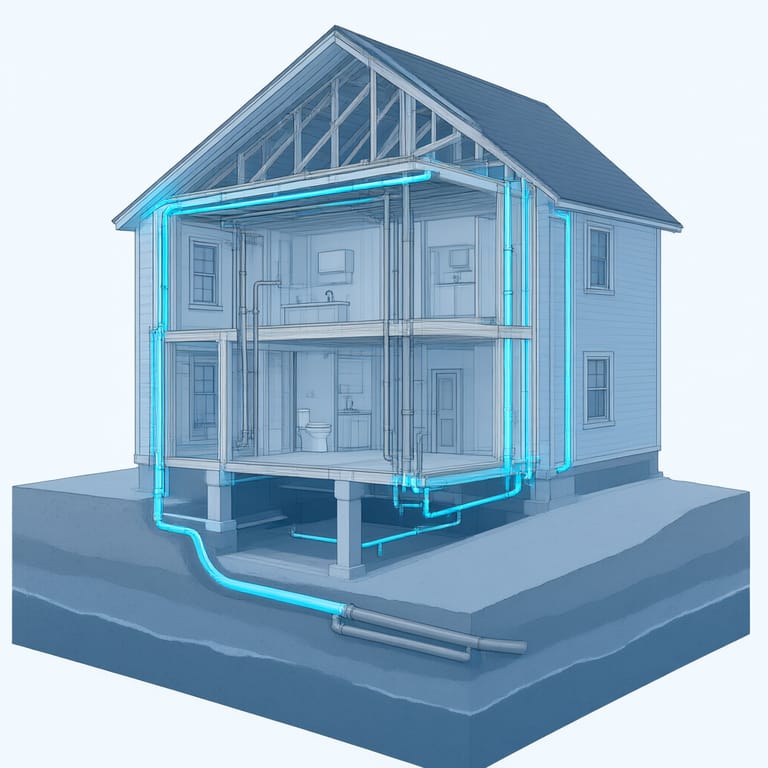
Match your situation to the right guide
| Your situation | Start here |
|---|---|
| Water is actively flowing, a ceiling is sagging, or a main line is spraying | Burst pipe plumber |
| A line froze over and is leaking as it thaws | Burst frozen pipes |
| The flow is stopped, and now you need the line fixed properly | Burst pipe repair |
| No visible leak, but the water bill, pressure, or a stain says otherwise | Signs of a burst pipe |
| Standing water across floors or a finished basement | Burst pipe flooded house |
| You want to know why it happened, and how to keep it from repeating | What causes pipes to burst |
| You're pricing the work before you commit to it | Burst pipe repair cost |
What's inside each guide
Burst pipe plumber
For the household with water moving right now. A four-step damage-control drill, the signs that separate a dispatch-now call from a morning appointment, what after-hours help honestly costs, and how the partner network answers through freeze season.
Burst frozen pipes
Freeze emergencies play by their own rules: the flood usually arrives with the thaw, not the freeze. Covers why ice splits lines, the temperatures that matter, which materials fail first, and safe thawing when a run is frozen but not yet leaking.
Burst pipe repair
The calm-after-shutoff read. How plumbers actually fix a ruptured line (cut-and-replace, press fittings versus soldered copper, PEX splices), what the visit looks like step by step, and when patching one section stops making sense compared with repiping the run.
Signs of a burst pipe
How can you tell if a pipe burst with no visible leak? A jumping water bill, hissing behind drywall, a soft patch in the yard. This guide ranks the evidence by how much it actually tells you and walks through a five-minute water-meter test that settles the question.
What causes pipes to burst
The post-mortem and the prevention brief in one. Eight causes ranked for cold-climate homes (freezing first, then corrosion, pressure, water hammer, and roots), plus how the shape of the break reveals which one you had.
Burst pipe flooded house
When the water already won. First-hour priorities for a flooded home: electrical safety, documenting the loss for your insurance claim, what restoration crews do differently from plumbers, and the drying deadlines that decide between repairs and mold.
Need a licensed plumber right now?
Call (800) 555-0173Free call, connects to a licensed local plumberLicensed plumbing partners in your area- Licensed and insured partner network
- 24/7 call routing
- Free call, no obligation
- You approve the price with the plumber directly
What a pipe burst costs to put right
Per Angi's 2025 pricing data, most repairs land between $200 and $3,000, the national average is roughly $500, and jobs involving underground lines or water-damage cleanup can reach $5,000. Labor, not parts, drives the total: figure four-fifths of the invoice. Set those figures against the $13,954 average insurance claim above and the math is blunt: the fix is cheap compared with the water. Speed moves the invoice more than anything else; the gap between a shutoff in minutes and a leak that runs overnight is usually the gap between drying fans and a gutted ceiling. The burst pipe repair cost guide breaks down per-foot rates, after-hours premiums, and what moves a quote up or down.
Why freeze-belt homes take the worst of it
Cold is the signature cause in the northern states. Field research by the Building Research Council at the University of Illinois found that uninsulated lines in unheated attic spaces begin freezing when outdoor air reaches 20°F, well past the point most people relax after seeing 32°F on the forecast. And design frost depths run 42 to 60 inches across the upper Midwest, reaching 60 to 80 inches in northern Minnesota, North Dakota, and Maine, per state frost-line compilations of FHWA data. In practice that means the vulnerable spots up north are predictable: attic and crawl-space runs, plumbing in exterior walls, rim-joist penetrations, and any buried line sitting above the local frost line.
Four questions people ask first
How urgent is a pipe burst? Genuinely urgent while water is moving: shut the main first, always. Once the flow is stopped and drained, it downgrades to a same-day or next-day repair.
The line just burst. What comes first? Water off, power off where things got wet, lowest faucet open, photos of the damage. The emergency page expands each step.
How do you know if a pipe burst somewhere out of sight? Close every fixture, then watch the water meter for five minutes. Movement with everything off means a burst pipe at home is leaking out of view, and the signs guide above ranks the likeliest hiding spots.
Will homeowners insurance cover it? Policies commonly treat sudden, accidental ruptures differently from slow leaks a homeowner ignored. Document everything and confirm the specifics with your carrier before cleanup gets ahead of the photos.
Whatever version of the problem you're holding, the next step is the same one: (800) 555-0173, a free call that connects you with a licensed local plumbing pro, day or night in freeze season.