A frozen pipe that lets go is one of the most expensive routine failures a house can have. Insurance industry data puts the average "water damage and freezing" claim at $13,954, and about 1 in 60 insured homes files one every year, according to the Insurance Information Institute. In 2022 that category alone accounted for 27.6% of all homeowners insurance losses. Set against those numbers, winterization is absurdly cheap: most of it is an afternoon of work and hardware that costs less than a single service call.
So how do you prevent frozen pipes? Preventing frozen pipes is three different jobs, not one product, and most freeze-belt homes need some of each.
Prevention pays for itself the first winter it works. Avoiding frozen pipes takes a few evenings and some hardware; the average claim after a failure is five figures. Every fix below exists to avoid frozen pipes before the cold arrives, ordered by what pays best.
How do you prevent frozen pipes? Three layers of defense
Permanent protection is work you do once: insulating exposed runs, sealing the cold-air leaks around them, and adding heat cable where insulation alone can't win. This layer protects you on the nights you forget to check the forecast.
Seasonal chores happen every fall: disconnecting hoses, shutting off and draining outdoor faucets, closing crawl space vents, and fully draining any building that will sit unheated. Skip these and the freeze finds the weak point for you.
Cold-snap tactics are what you do the night the forecast drops hard: dripping the right faucets, opening cabinet doors, holding the thermostat steady. They cost almost nothing but only work if you act before the line is frozen, not after.
The layers stack. A house with insulated plumbing needs fewer emergency tactics; a house relying on dripping faucets alone is gambling every time a front moves through.
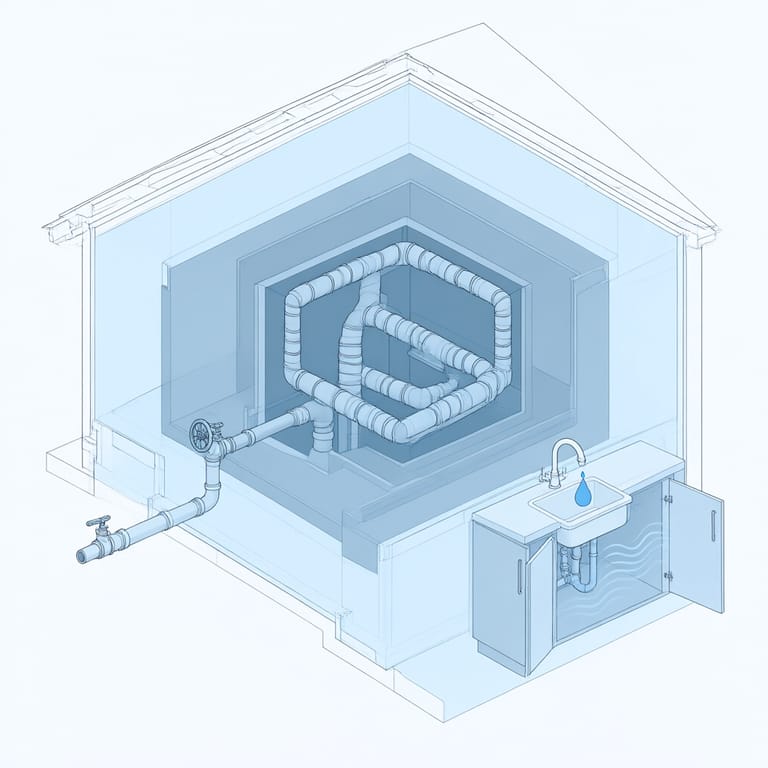
Match the fix to your situation
| Your situation | Start here |
|---|---|
| Bare copper or PEX visible in a basement, garage, or attic | Pipe insulation guide |
| Not sure whether you need insulation, heat cable, or something else | Freeze protection options compared |
| Hoses still connected, hose bibs never winterized | Outdoor faucet winterization |
| Lines under the house or a mobile home keep getting cold | Crawl space pipe protection |
| A property will sit empty or unheated this winter | Vacant house winterization |
| Hard freeze is in tonight's forecast | How to drip faucets correctly |
If the situation is already past prevention (no water at a faucet, frost on a pipe, a hiss inside a wall), skip the reading. Call (800) 555-0173 and NorthBriar will connect you with a licensed local plumber. The call is free, and you only pay for work you approve directly with the pro.
The guides, in the order most homes need them
Pipe insulation guide. For anyone who can walk into a basement, crawl space, or garage and see bare supply runs. Covers which ones to wrap first, foam sleeves versus fiberglass wrap versus spray foam, and install steps a first-timer can follow.
Freeze protection for pipes: options compared. A side-by-side decision page for people weighing insulation, heat cable, dripping, warm-air tricks, and drain-downs, with a comparison table, household scenarios, and the ten-year cost math.
How to winterize outdoor faucets. The fall chore with the best effort-to-damage-prevented ratio. Walks through disconnecting hoses, finding and closing the interior shutoff, draining the bib, and when a frost-free spigot is worth it.
Keeping crawl space pipes from freezing. The crawl space is usually the coldest plumbing in the house and the first to freeze. Covers vents, skirting, insulation strategy, and the special problems of mobile and manufactured homes.
How to winterize a vacant house. For a home that will sit without heat: the full drain-down sequence, water heater and trap handling, and why a thermostat left at 55°F is not a complete plan for an empty building.
How to drip faucets. The night-of tactic. Which faucets to open, whether to drip hot or cold, when the forecast says start, and the morning check that tells you whether it worked.
How do you prevent frozen pipes in your particular house? Start with the first two guides above and work down.
Need a licensed plumber right now?
Call (800) 555-0173Free call, connects to a licensed local plumberLicensed plumbing partners in your area- Licensed and insured partner network
- 24/7 call routing
- Free call, no obligation
- You approve the price with the plumber directly
How to keep pipes from freezing: quick answers
How do I keep pipes from freezing on one brutal night? Drip faucets fed by exposed runs, open cabinet doors on exterior walls, hold the thermostat steady; the American Red Cross floor is 55°F even with nobody home. Cheap, boring, effective against frozen pipes.
How to keep pipes from freezing without heat? Water that isn't there cannot freeze. For a building sitting cold, drain down: main off, faucets open high and low, water heater emptied, traps protected. The vacant-house guide above gives the exact order.
What makes the freeze belt different
Advice written for Tennessee doesn't transfer to Minnesota. Across the northern tier, design frost depths run 42 to 80 inches, deep enough that even buried water lines need real burial depth, not luck. Field research by the Building Research Council at the University of Illinois found uninsulated runs in unconditioned attics began freezing once outdoor temperatures hit 20°F, a threshold northern winters cross for weeks at a stretch, not hours. That's why this site treats heat cable, deep insulation, and drain-downs as standard equipment rather than exotic upgrades, and why every recommendation here assumes a real winter and frozen lines as the yearly threat.
When to skip the reading and call
Prevention has a deadline. Pick up the phone instead of a guide if:
- No water at one or more faucets during a hard freeze (a frozen line until proven otherwise)
- You hear hissing or running water inside a wall or ceiling
- A pipe shows frost, a bulge, or a split. Shut off the main water valve first, and keep people away from any wet area near outlets or the electrical panel
- You smell gas anywhere near a furnace or water heater. Leave the building and call 911 from outside before anything else
For everything else, call (800) 555-0173. Partner plumbers answer 24/7 during freeze season, and NorthBriar connects you with licensed, insured local pros. We're a publisher, not a contractor, and the number exists so you don't have to vet companies at 2 a.m.
Need a licensed plumber right now?
Call (800) 555-0173Free call, connects to a licensed local plumberLicensed plumbing partners in your area- Licensed and insured partner network
- 24/7 call routing
- Free call, no obligation
- You approve the price with the plumber directly